
Preschool Self Defense: How BJJ Helps Kids Stay Safe
Preschool is a foundational phase when kids start developing independence, collaboration, interaction and interpersonal skills. That’s why preschool self-defense should be age-relevant and focused on functional safety instead of fighting. BJJ can support these lessons by teaching regulated movement, body alertness, and emotional strength combined with decision-making in a monitored environment.
How to Self Defense for Pre-Schoolers
For little children, safety skills begin with understanding what to do before physical contact happens. Preschoolers can practice easy responses like utilizing a strong voice, moving to a secure place, staying close to trusted grown-ups, and recognizing inappropriate behavior. These activities are simpler to remember when taught through games, together with practice scenarios rather than challenging strategies.
- Teach the kid to identify uncomfortable situations.
- Self-defense for preschools motivates kids to escape unsafe events.
- Train them on where to look for reliable grownups.
- Convey that getting help is always suitable.
How Brazilian Jiu-Jitsu for Preschoolers Builds Confidence
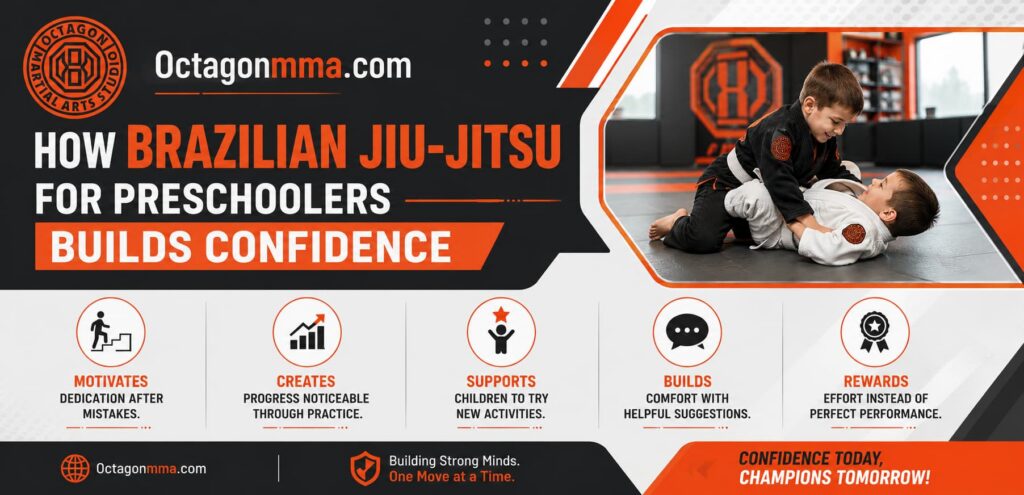
Among the greatest gains of brazilian jiu jitsu for kids is the chance to undergo tiny, realistic setbacks. A kid may first have trouble with a motion, but ultimately complete it through practice. This procedure teaches dedication without demanding kid to compete. As time goes on, effectively learning new movements can help a kid become more comfortable with flaws plus new experiences.
- Motivates dedication after mistakes.
- Creates progress noticeable through practice.
- Supports children to try new activities.
- Builds comfort with helpful suggestions.
- Rewards effort instead of perfect performance.
Benefits of Martial Arts for Pre-Schoolers
The gains of martial arts for young children goes more than self-defense. BJJ sessions can offer an effective environment where kids practice large motor abilities like crawling, balancing, shifting direction and handling their movements. Organized activities can also welcome ideas like sharing turns, remembering sequences, plus finish tasks step by step.
- Improves alignment and motor control.
- Develops large motor skills.
- Motivates routine physical activities
- Boosts concentration through organized games.
- Invites positive group habits.
For parents thinking about preschool self-defense training, these age-related gains can be just as critical as the martial arts element.
How BJJ Helps Young Children Stay Safe
BJJ delivers children a specific type of physical education since it includes regulated motion at close range. Preschoolers can slowly become comfortable with ideas like upkeep balance when another individual moves around them, shifting positions with caution, plus knowing how their bodies navigate on the ground. These skills can develop resilience without teaching kids that conflict is desirable.
- Improves balance during movement.
- Invites secure ground motion.
- Develops body position alertness.
- Trains regulated physical contact.
- Supports kid learn personal space.
The target is not to prepare a young child for a fight. Rather, BJJ offers motor abilities that may support a kid respond more calmly and assuredly during sudden physical situations.
Kids Self Defense Classes Safety Tips
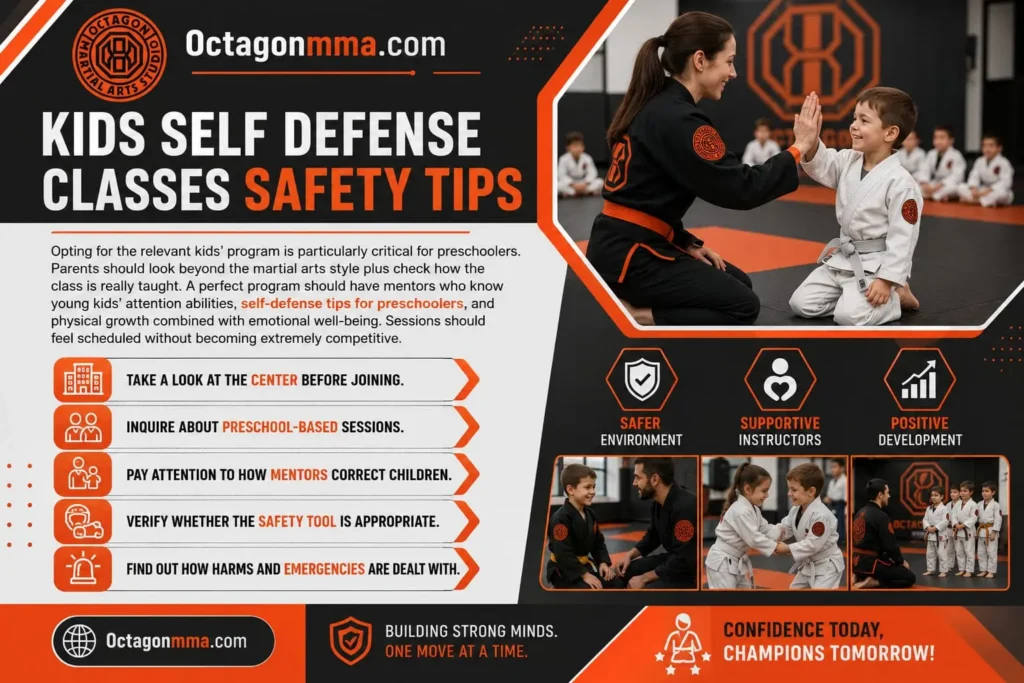
Opting for the relevant kids’ program is particularly critical for preschoolers. Parents should look beyond the martial arts style plus check how the class is really taught. A perfect program should have mentors who know young kids’ attention abilities, self-defense tips for preschoolers, and physical growth combined with emotional well-being. Sessions should feel scheduled without becoming extremely competitive.
- Take a look at the center before joining.
- Inquire about preschool-based sessions.
- Pay attention to how mentors correct children.
- Verify whether the safety tool is appropriate.
- Find out how harms and emergencies are dealt with.